
Features
Inventory
What you hold, where it sits, and what it cost — summed from movements, agreeing with the ledger.
An item is tracked or it is not. A tracked item's goods are an asset: buying one debits inventory rather than an expense, and selling one charges cost of sales at what the books hold it at. Every figure the inventory screens show is summed from stock movements, and the inventory account is reached independently from journal lines — so the two can be shown side by side and a difference cannot hide.
uae-einvoicing.com
In this area
- Weighted average or FIFO, chosen once per company and fixed the moment stock has moved, because changing it would restate issues already posted.
- Locations — a warehouse, a shop, a van — with one of them the default, and a location column on every document line that needs one.
- Stock adjustments: each line carries its own sign, because a count finds some things and loses others, and the sheet posts one netted entry.
- Stock transfers, which post no journal entry at all: the goods are worth the same wherever they sit.
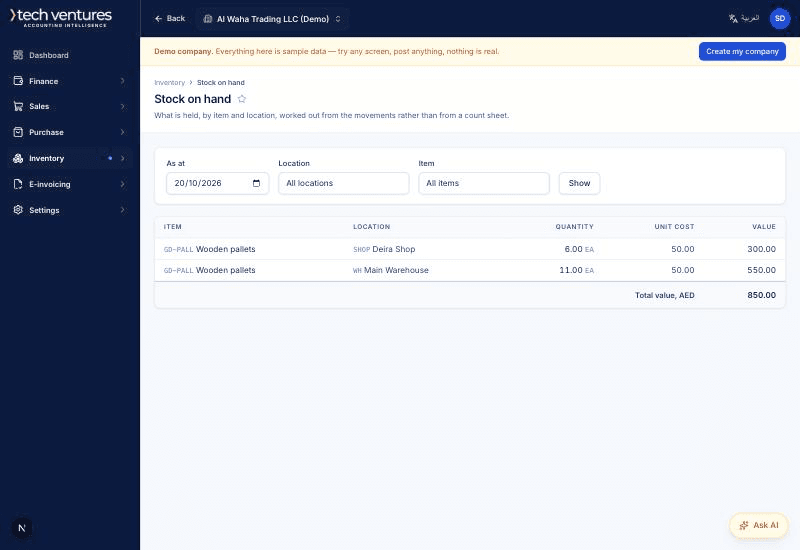
- Stock on hand by item and location, a movements ledger naming the document behind every change, and a valuation report that prints the stock's value beside the inventory account's balance.
- Selling stock you do not have is allowed and costed at the last known price, with the movement marked estimated — or refused outright, if you would rather it were.